August 7, 2026
- Efficient, high-bandwidth streaming of training data. Each system comes configured with a single 480 GB boot OS SSD, and four 1.92 TB SAS SSDs (7.6 TB total) configured as a RAID 0 striped volume for high-bandwidth performance.
- Multi-gpu and multi-system with GPU performance designed for HPC and Deep Learning applications. Multi-system scaling of Deep Learning computational workloads, both inside the system and between systems, to match the significant GPU performance of each system.
- The system memory capacity is higher than the GPU memory capacity to enable simplified buffer management and balance for deep learning workloads.
- Access to high-bandwidth, low-latency Briefcase storage.
ERISXdl Pricing
2026/01 Fees will no longer be applied to the DGX compute nodes.
Deep Learning Frameworks
Deep learning is a subset of AI and machine learning that uses multi-layered artificial neural networks to deliver state-of-the-art accuracy. GPU-accelerated deep learning frameworks offer flexibility to design and train custom deep neural networks and provide interfaces to commonly-used programming languages.
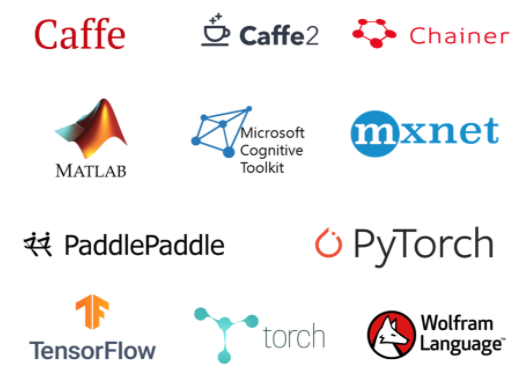
- Caffe/Caffe2
- Microsoft Cognitive Toolkit
- Pytorch
- TensorFlow
- mxnet
- theano
- Torch
Take a look at the NVIDIA Catalog to find all the available applications. Furthermore, at this time of writing (2026/08), the version of the cuda driver on the compute nodes is 550.90.07 hence, for compatibility, please ensure your selected image supports Cuda Toolkit Container version 12.4.
Support of Containerized Environments
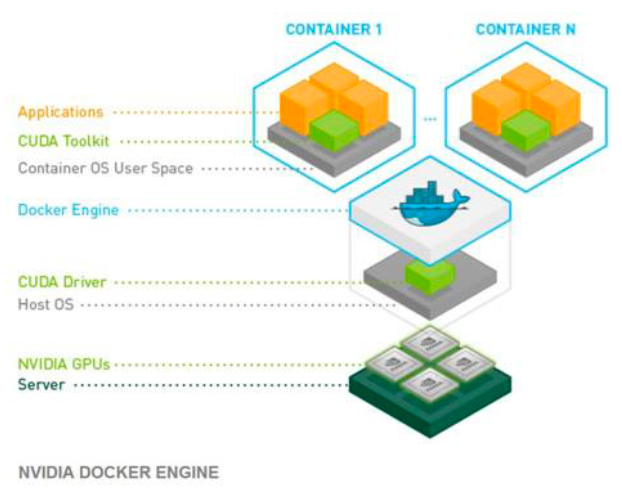
- Each deep learning framework is deployed in a separate container and where each framework can use different versions of libraries libc, cuDNN, etc., without interaction from the host operating system or other containers.
- Deep learning frameworks in the NVIDIA Docker containers are automatically configured to use parallel routines optimized for the Tesla V100 GPU architecture in the ERISXdl system.
- As deep learning frameworks are improved for performance or have bug fixes, new versions of the containers are made available in the NVIDIA Container Registry.
- Reproducibility is a key advantage of containerization and particularly in research.
- Containers require fewer system resources than traditional or hardware virtual machine environments since they don't include operating system images and are able to distribute the resources more efficiently.
Users can additionally deploy customized Docker images, possibly resulting from a collaboration, on ERISXdl and so assist in faster model development. In this case the main requirement is that the image contains an appropriate version of the Cuda Toolkit for compatibility with the version of the cuda driver installed on the compute nodes.
SLURM Scheduler for Resource Management
ERISXdl employs the job scheduler Slurm to manage user access to the cluster's compute resources. Slurm is an open source, fault-tolerant, and highly scalable cluster management and job scheduling system for large and small Linux clusters.
Application Procedure for the ERISXdl platform
The procedure for application is:
- Confirm your group has a PAS group, and if not follow the registration procedure described here, so that the PI/keygiver adds users to the PAS group to allow access to the ERISXdl platform.
- Complete the application form for erisxdl services here
- Confirm members of the PAS group have an SciC Linux Clusters Account if they wish to use Slurm on ERISXdl.
Using ERISXdl
For more information about getting started with ERISXdl, please see these articles: